TurtlePen / remote MCP + browser WebMCP
Measure it. Place it. Prove it.
The public endpoint serves TurtlePen's complete 73-tool engine with an active document that survives separate API calls. The workspace below is a smaller, visible WebMCP companion for working alongside an agent in ChatGPT's browser; the two surfaces are deliberately named and counted separately.
73 canonical tools at one API link.
Connect
Send initialize with Accept: application/json, text/event-stream, then reuse the returned Mcp-Session-Id on every request.
Continue
D1 serializes session versions; R2 restores the document, undo history, saved files, and render artifacts for one idle hour.
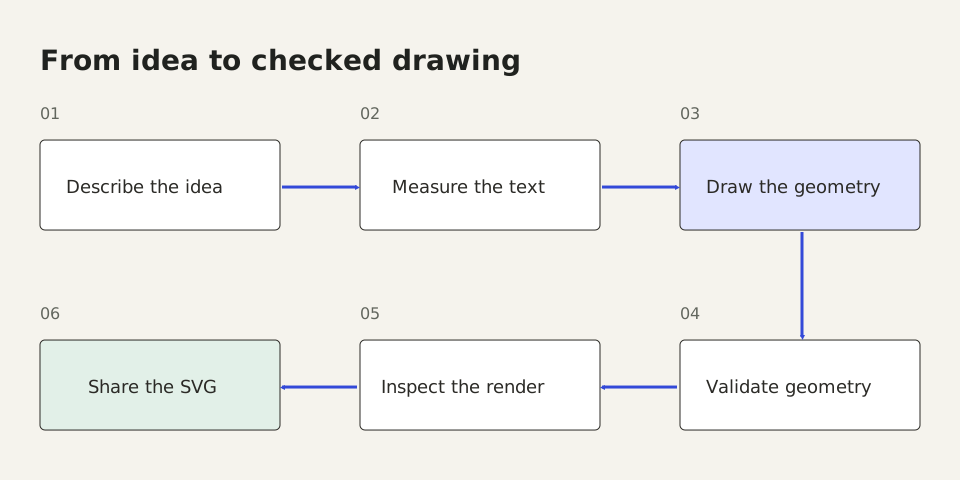
Trust the result
The hosted route delegates measurement, L002/L003 text fit, connector labels, and self-contained SVG output to upstream v0.3.2.
Browser companion / 6 page-local tools
Watch a focused WebMCP adapter work on this canvas.
This visible workspace is not the remote 73-tool server. It keeps a compact box-and-connector document in the open page so a browser agent and a person can share the same immediate view.
Live WebMCP surface
A canvas the agent can see with you.
Registering browser tools…
Tool contract
Current validation
CLEAN
1 structural finding. Validation reports; it never silently moves or resizes geometry.
01
Remote MCP
Use the API for the full pen language, pages, shapes, layout, routing, images, glyphs, history, and adjudication.
02
Page WebMCP
Use the visible six-tool adapter when shared browser context matters more than the complete engine.
03
No silent fallback
Tool counts, state ownership, validation depth, and artifact behavior stay explicit on both surfaces.